
A Paper by Nir Eyal
May 22, 2026
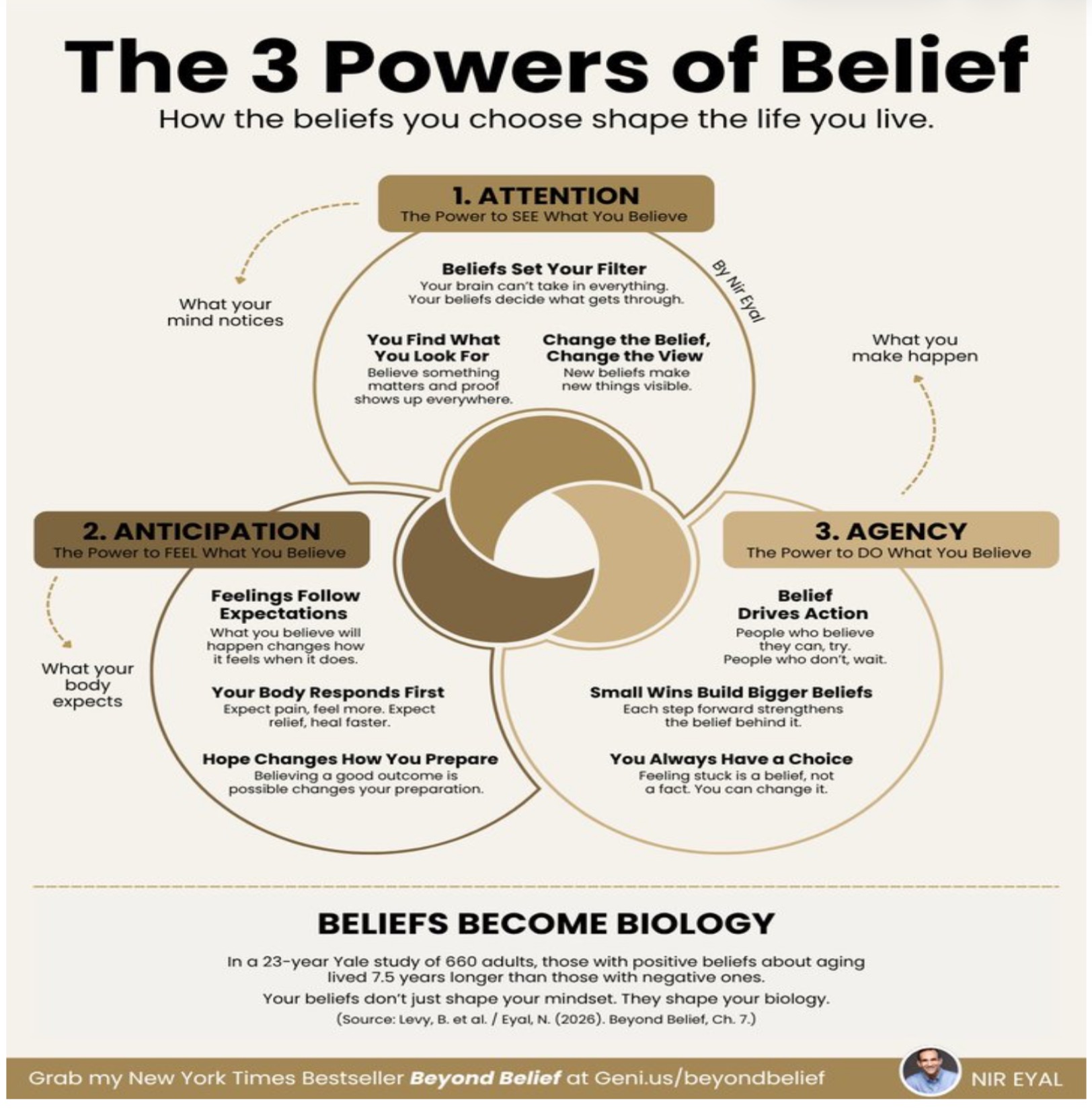
And the ones you hold about yourself shape three things more than almost anything else: what you notice, what you expect, and what you do.
I call them the 3 Powers of Belief.
Beliefs filter what you see. If you believe willpower is a limited resource, you’ll notice every moment you feel “depleted.” Carol Dweck’s research found that signs of ego depletion only showed up in people who already believed willpower runs out. The belief produced the evidence, not the other way around.
Beliefs shape what you expect next. If you believe distraction is something happening to you, you’ll keep waiting for the next interruption. If you believe it starts from within, you start looking for the discomfort you’re trying to escape.
Beliefs decide what you do. “I’m not a snacker” beats “I’m trying not to snack.” Vegetarians don’t debate bacon. Identity closes the question before willpower has to open it.
The useful move isn’t to chase truer beliefs. It’s to ask whether the belief you’re holding is doing the work you need it to do — and if it isn’t, to swap it for one that does.
Beliefs are tools. Pick better ones.
NIR EYAL
New York Times bestselling author of Beyond Belief, Indistractable, Hooked | Keynote speaker on behavioral science, focus, and belief | Former Stanford Lecturer | Featured in NYT, HBR, CNN, Time 🧠