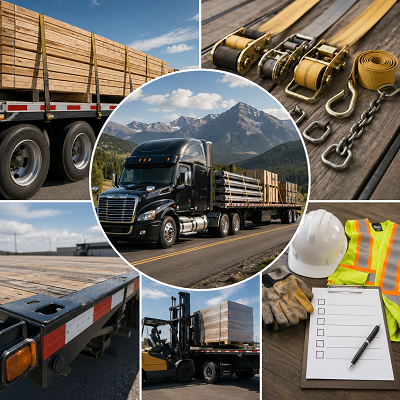
Securing heavy machinery on Step Deck Loads demands specialized techniques to ensure both safety and stability throughout the transportation process. The substantial size and weight of heavy machinery present unique challenges that must be meticulously addressed to prevent accidents and ensure the machinery reaches its destination securely.

The process begins with careful planning and preparation. Before loading the heavy machinery onto the trailer, it is crucial to thoroughly inspect the trailer for any structural weaknesses or defects that could compromise the load's stability. Selecting the right type of trailer—RGN, Step Deck, or Double Drop—based on the machinery's dimensions and weight is essential. Each trailer type offers different advantages for transporting oversized or heavy equipment, with RGN trailers being particularly suitable for the heaviest loads due to their low center of gravity and robust steel construction.

Once the appropriate trailer is chosen and inspected, the next step involves the precise placement of the heavy machinery. The machinery should be loaded in a way that ensures an even distribution of weight across the trailer, maintaining balance and preventing undue stress on any part of the trailer.

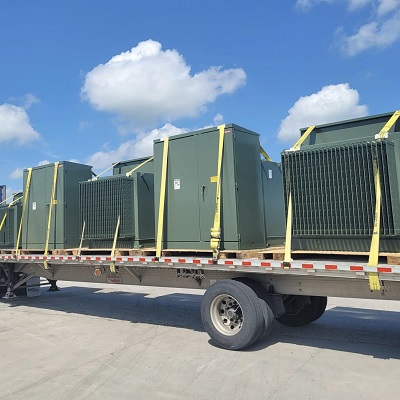
Securing tank heads and metal domes on a flatbed trailer requires specialized techniques to prevent movement and ensure safety. The unique shape and substantial weight of these items pose significant challenges, necessitating a meticulous approach to ensure they are transported securely and arrive at their destination intact.

The process begins with thorough planning and preparation. Before loading tank heads and metal domes onto the trailer, it's essential to inspect the trailer for any structural weaknesses or defects that could compromise the stability of the load. Selecting the appropriate trailer and ensuring it is in good condition is the first step in securing these heavy and awkwardly shaped items.

Proper placement of the tank heads and metal domes on the trailer is crucial. These items should be positioned to distribute their weight evenly across the trailer's surface, maintaining balance and preventing undue stress on any part of the trailer. Typically, placing the heavier items closer to the trailer's center and over the axles can help achieve optimal stability. Securing these items involves using robust and reliable equipment. Heavy-duty chains, straps, and binders are essential tools for this task. Given the curved surfaces of tank heads and metal domes, it is crucial to use multiple points of securement to prevent any movement. Chains and straps should be placed strategically around the items, ensuring they are tightly bound and unable to shift during transit. Using edge protectors is recommended to prevent the straps and chains from damaging the items or becoming cut, which could weaken the securement.

The First Level of Certification is “Basic.” This is an entry-level credential that demonstrates foundational knowledge or skills that expand upon those offered in the prerequisite classes. It’s designed for beginners or others that could benefit from a “refresher” curriculum, and serves as another stepping stone toward achieving more advanced qualifications. There are eight classes that one must successfully complete in order to take the Basic Certification Test which consists of one hundred and twenty questions.

The Second Level of Certification is “Advanced.” This credential indicates that the holder has specialized knowledge and expertise beyond the foundational level for their field. It proves a high level of achievement and a commitment to professional development, which can set an individual apart among those in their professional field of expertise. It also serves as another step toward achieving the top credential, Master Certification.  There are eight classes that one must successfully complete in order to take the Advanced Certification Test which consists of one hundred and fifty questions.

Learning Without Scars requires that all certification programs start with a Diagnostic Test that is accessible through our Learning Management System. This allows us to assess the employee’s basic skills and knowledge and determine where additional learning is needed in order for he or she to perform their job at optimal levels. Learning Without Scars can also then provide a learning path to guide them through the educational process.

The score on the Diagnostic Certification Test helps determine where the learning and testing process begins. For those that score on the low end, a prerequisite bundle of classes is highly recommended. These eight classes provide thorough knowledge of the fundamentals needed for success as the learner progresses through the three levels of professional certification: Basic, Advanced and Master.

Industry accepted certification programs provide documented credentials for industry professionals that enhance employee’s career progress, increase their value to their employers, and help employees better contribute to company success. For employers, certifications provide objective, measurable industry standards to assessing and improving employee performance. They also contribute to employee development, demonstrate employer commitment to employees, and improve recruitment and retentions programs. All the above help improve customer satisfaction, customer loyalty, and most importantly customer retention.

The Third Level of Certification is “Master.” This credential indicates that the holder has a very high level of specialized knowledge and expertise in their professional field of management. They have shown the drive and commitment to pursue a rigorous curriculum to learn the best practices in what they do and become a member of “the best in the industry.” It truly sets them apart from the others. There are eight classes that one must successfully complete in order to take the Advanced Certification Test which consists of one hundred and eighty questions.

With dramatic changes across the supply chain and increasing pressure on dealers to retain their customers, understanding the causes of customer defections has become more important than ever. A complaint is, in many ways, a gift—the customer could have simply walked away without saying a word. Buying patterns and order characteristics now offer clear, actionable insights, and traditional processes such as the Complaint–Cause–Correction structure have become even more valuable in guiding effective responses. This comprehensive skills assessment evaluates all of the knowledge and competencies required for the Inspector role.

With rapid advances in technology and the evolving needs and expectations of buyers, customer loyalty has become a critical component of doing business. Too often, organizations have prioritized profit over people, leaving employees with workloads that are increasingly difficult to manage. In this environment, our ability to communicate effectively with customers, suppliers, and colleagues—and to respond accurately to their questions—has become essential. The customer service communicator plays a central role in this effort and is also responsible for training and mentoring other customer‑facing personnel. This comprehensive skills assessment evaluates all competencies required to perform the customer service communicator function.

As distribution networks for construction equipment become increasingly driven by performance standards and cost control, the importance of strong customer service has never been more evident. Modern Dealer Management Systems now provide comprehensive data analytics, life‑cycle management statistics, and detailed reporting on market potential and market capture. Leveraging these tools effectively demands exceptional customer service leadership.  This comprehensive skills assessment evaluates all competencies required to perform the customer service manager function.

In the parts business we communicate with the marketplace in a variety of methods. We deal with various systems, manually and technologically. We have a responsibility to serve and retain customers while at the same time we have to make money for the business. This is a complicated business.

To assist us in managing the business and help us implement our company strategy we use a business tool that is called the “Balanced Scorecard.” The Balanced Scorecard was developed in the 1990s, designed for use in the planning and implementation of a company’s strategy. The scorecard looks at your business from four directions; finance, internal, innovation and customer. From this vantage point the company can develop a strategy as part of their operating plan.  These plans are meant to help a company achieve its goals.  If a plan cannot be agreed upon and effectively executed, a business cannot effectively reach its goals.

In this class, you will learn the ins and outs of this valuable tool, and the costs we pay in our business when we fail to execute our plans for success in our market.