
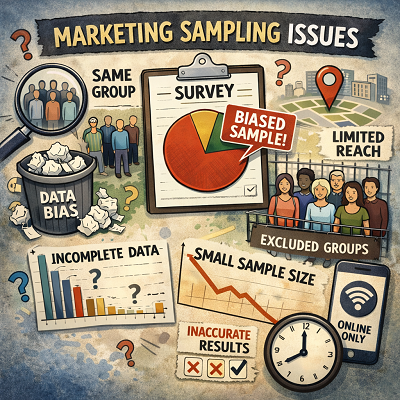
This lecture provides a foundational overview of the sampling process within marketing research, covering essential concepts from developing a sampling plan to executing fieldwork. It defines a sample as a representative segment of a larger population of interest and details how to identify target audiences using demographic, geographic, behavioral, and psychographic criteria. The material distinguishes between probability and nonprobability sampling methods, offering various approaches for determining appropriate sample sizes—such as statistical methods, budget availability, and “rules of thumb”—while highlighting that gains in accuracy often diminish once a sample size exceeds 500. Finally, the lecture addresses practical considerations, including the calculation of contact costs and response rates, and the impact of factors like interviewer bias and research scope on the overall sampling outcome.
LWS: Marketing Sampling (ENG)
$100.00